Yi iot
- 2.5
- Rating
- 10.00M
- Installs
- Free
- Price

 Analysis by App-foxy
Yi iot is a different kind of tool from the video editors I usually recommend for making polished clips. It is a video and audio communication app from Kami HK, built around staying connected with family through live video rather than cutting footage, adding effects, or exporting a finished production. That distinction matters: if your creative output is a quick family update, a live check-in, or a simple moment you want to share immediately, it can fit naturally into your routine. If you expect a timeline, filters, captions, trimming, or a publishing workflow, you will be looking in the wrong place.
I approached it as a practical communication tool rather than judging it like a conventional editor. The app is free to install, carries an Everyone age rating, and works on Android devices running version 7.0 or later. Its current version is 5.0.3_20260206. The large install base—over ten million—suggests that many people use it as part of a broader camera or family-monitoring setup, but popularity does not remove the need to check whether its live-first design matches your own needs.
Where Yi iot fits in a creative workflow
I find it useful to think of Yi iot as a live viewing and conversation step within a broader creative routine, not as the place where a finished video is made. In this section, I’ll focus on ways a real-time connection can help someone assess a scene or share a moment before deciding what to record. That distinction can keep a simple check-in from turning into an unnecessarily complicated production.
You May Also Like

 Blood Strike: 2.5 Anniversary
Blood Strike’s Loadouts Turn Every Drop Into a Tactical Gamble
A close look at Blood Strike’s custom loadouts: how fast access to signature weapons reshapes its battle royale rhythm, rewards preparation, and narrows the gap between fights.

 Pandora - Music & Podcasts
Pandora’s Music Is Easy to Start, but Harder to Recover
Pandora’s strength is its low-effort path from a seed to a station. Its weak spot is how much confidence it asks you to place in connection, setup, and quiet recovery.

 8 Ball Pool
 Is Built on Rivalries, Rematches, and Routine
A close look at the rivalries, rematches, shared routines, and unanswered safety questions that turn a quick pool match into a persistent mobile community.

 Samsung Music
’s Quiet Strength Is Playing What You Already Own
Its reach comes less from spectacle than from dependable access to a personal library. That simplicity is both the app’s strongest retention engine and its ceiling.

 AccuWeather: Weather Radar
AccuWeather Review: A Quick, Clear Forecast for Everyday Decisions
For everyday plans, the best forecast is the one you can understand quickly. AccuWeather makes rain timing, radar, and local conditions easy to act on, with a few trade-offs.

 Hill Climb Racing
Why Hill Climb Racing Still Turns Crashes Into One More Run
A tiny car, a bumpy hill and one more upgrade: Hill Climb Racing keeps resurfacing because its simple chaos makes every near-miss feel personal.
More From Our News Desk



Starting with a live moment instead of a project file
Most creative apps begin with an empty canvas. Yi iot begins with a connection. That makes the “starting point” less about planning a video and more about deciding what deserves to be seen or heard right now. I found that useful for situations where preparation would defeat the purpose: showing a child’s first steps to a relative, checking in with someone at home, or sharing a quick reaction while an event is happening.
The benefit is speed. There is no need to record a clip, open an editor, choose a soundtrack, render a file, and then send it somewhere else. A live conversation can be the finished result. For families who value immediacy over presentation, that is a meaningful difference from social video tools. You are not trying to make a post look complete; you are letting another person be present in the moment.
That same simplicity creates the first important trade-off. A live call gives you less control over framing, timing, sound, and mistakes than a recorded video. I would not choose this approach for a product demonstration, a lesson that needs careful pacing, or anything that must look consistent from beginning to end. Yi iot is strongest when authenticity matters more than polish.
A realistic everyday scenario
Imagine that I am away from home while a family member wants to show me something happening in the living room. With a normal messaging app, I might receive a short recording, wait for it to upload, and reply after watching it. Yi iot is better suited to a live exchange: I can see the situation as it unfolds, ask a question, and react immediately. That can be more reassuring than receiving a clip with no context.
For this kind of use, I would prepare before the call rather than trying to fix problems during it. I would check the camera angle, remove distracting light behind the subject, and make sure the person on the other end knows that the conversation is live. These small steps matter because the app is not designed to rescue weak composition with editing tools. The quality of the result depends heavily on the room, the device position, and the people using it.
A less obvious advantage is that live communication can reduce the pressure to create a “presentable” video. A relative does not need to perform for the camera or repeat a moment several times. That makes Yi iot feel more personal than an editor when the goal is connection rather than content production.
Who should begin with it
I think Yi iot makes sense for families who want a straightforward way to connect through video and audio, especially when the people involved are not interested in learning a full editing suite. Its Everyone rating also makes the basic concept approachable for a broad household audience, although adults should still guide younger users through sensible camera habits and call etiquette.
It is less convincing as a starting point for a creator building a library of reusable material. There is no reason to treat a live call as a substitute for a proper camera app, screen recorder, or editor when the intended result needs to be saved, revised, branded, or delivered to an audience. In that situation, I would use Yi iot only for discussion or review and keep the actual production elsewhere.
Making the connection work smoothly
The making process here is mostly about arranging the conditions for a good conversation. I would place the device where faces are visible, avoid pointing the camera directly toward a bright window, and keep unnecessary background noise away from the microphone. These are ordinary video-call habits, but they become especially important when there is no editing stage afterward.
I also recommend deciding in advance whether the call is for a quick update or a longer conversation. A short check-in benefits from Yi iot’s directness. A longer session may need a more deliberate setup, because holding a phone at an awkward angle or moving around constantly can make the experience tiring. If the app is being used with a compatible camera environment, the physical placement of that equipment becomes part of the creative process: the best view is usually the one that lets people talk naturally without repeatedly adjusting the device.
One practical tip is to treat the first minute as a setup check. I would confirm that the other person can hear clearly, that the intended area is in frame, and that nobody is accidentally showing something private. Doing this before the real conversation begins prevents the common problem of discovering a poor angle only after an important moment has passed.
Iteration without an editing timeline
Yi iot does not encourage iteration in the usual creative sense. There is no visible sequence of cuts to refine or version of a clip to compare. Instead, iteration happens between conversations. I might change the device position after one call, improve the lighting before the next, or agree on a better routine for family updates. The “revision” is in the setup and the communication habit, not in the media file.
That can actually be useful for recurring situations. If I regularly check on a room, a pet, or a family member, I can learn what angle gives the clearest view and what time produces the least background noise. Over several uses, the workflow becomes more dependable even though the app itself remains simple. This is a subtle strength for people who want repeatable access rather than a one-off edited result.
The limitation is that mistakes remain part of the live experience. If someone misses a sentence or the camera points away at the wrong moment, there is no editing pass to repair it. Users who need retakes, precise cuts, subtitles, color adjustments, or music should choose a dedicated video editor. Yi iot should be viewed as a live input and communication layer, not as a post-production environment.
How it compares with familiar alternatives
Compared with a standard messaging app, Yi iot is more focused on immediate video and audio contact. A messaging service is often better when I want to send a recorded clip, leave an asynchronous update, or keep a written conversation beside the media. Yi iot is more appealing when waiting for a file to be recorded and delivered would make the moment less useful.
Compared with a social video platform, it offers a much more private-feeling purpose because the central activity is direct communication rather than public publishing. The trade-off is that it does not serve the same discovery or audience-building role. I would not use it to grow a channel, collect reactions from a broad audience, or present a finished creative portfolio.
Compared with a full editor, the difference is even clearer. Editors give me control over pacing, sound, graphics, and revisions. Yi iot removes most of that work in exchange for immediacy. Neither approach is universally better. For a family conversation, editing can be unnecessary friction; for professional output, the lack of editing control is a serious limitation.
Preparing a handoff or shared moment
The handoff stage is also live rather than file-based. Instead of exporting a finished video, I bring another person into the moment through the app. That is convenient when the recipient needs to respond, ask questions, or guide what happens next. It is less suitable when the recipient needs a permanent file for later viewing, archiving, or publication.
This distinction is important for anyone using the app around creative work. I could use Yi iot to show a rough physical setup to a collaborator, ask for immediate feedback on a scene, or let a family member view an event remotely. I would not rely on it as the final delivery method for a client, a school assignment, or a social campaign unless the requirement is specifically a live presentation.
A useful workflow is to separate review from delivery. I can use the live connection to discuss what should change, then capture and edit the actual material with tools designed for recording and export. This avoids forcing Yi iot into a role it was not built to fill while still taking advantage of its real-time communication strength.
Costs, scale, and practical expectations
The app itself is free, but in-app purchases range from small amounts to items priced as high as $479.99. That makes it important to pay attention during setup and use, particularly if the app is installed on a shared device or used by a child. I would not assume that “free” means every related function or connected experience is cost-free. Before committing to a purchase, I would check exactly what it unlocks and whether it is relevant to the way my household plans to use the app.
Its average rating is 2.5 from around 120,000 ratings, with roughly 12,000 written reviews. I read that as a reason to keep expectations realistic rather than as an automatic rejection. A live communication app can feel excellent when the device setup and intended use line up, yet frustrating when someone expects editing, broad compatibility, or a polished publishing pipeline. The rating suggests that the gap between expectation and actual purpose is worth considering before installation.
The app has been available since May 9, 2018, and its continued presence alongside the current release indicates an established product rather than a brand-new experiment. Still, an older supported operating-system range does not guarantee that every phone will deliver the same experience. Camera quality, microphone placement, network conditions, and the surrounding hardware can affect a call more than the app’s age or install count.
Privacy-minded habits I would use
Because the central activity involves live video and audio, I would be deliberate about where the camera points and who is included in the conversation. I would avoid leaving the device aimed at private areas when no call is taking place, and I would tell people nearby when video or audio is active. These are not glamorous features, but they are part of using a live communication tool responsibly.
I would also avoid treating a family connection as an unattended recording system. If the purpose is to speak with someone, keep the interaction intentional and end it when the conversation is over. For households with children, I would establish simple rules about when calls are acceptable and which rooms should never be shown. Those habits make more difference to a comfortable experience than searching for hidden creative controls that the app does not provide.
Who should skip Yi iot
I would skip it if my main goal were to create edited videos. The absence of a clear production path means I would still need another app for trimming, transitions, captions, music, file organization, and publishing. Installing Yi iot for that purpose would add another step instead of replacing the tools I actually need.
I would also look elsewhere if asynchronous communication is essential. Some people prefer recording a message when convenient and letting the recipient watch it later. A live-first workflow can be awkward when schedules do not overlap or when the recipient needs to replay instructions. In those cases, a messaging app with dependable video attachments may be a better fit.
Finally, I would be cautious if unexpected purchases would be a problem. The wide in-app purchase range means I would review the purchase flow carefully and use appropriate device controls. The app can be free to start, but that does not mean every possible use carries no cost.
My creator-focused verdict
After looking at Yi iot through the lens of making and sharing visual work, I see it as a live connection tool rather than a creator studio. Its best output is not a polished file; it is a timely exchange between people. That makes it genuinely useful for family check-ins, remote participation, quick visual feedback, and moments where conversation matters more than presentation.
My main recommendation is to choose Yi iot for immediacy, not for editing. Set up the camera thoughtfully, use the first minute to check sound and framing, and treat each call as a live handoff rather than an export. If that matches your routine, the app can be simple in a good way. If you need control, revisions, saved deliverables, or public publishing, a dedicated editor or messaging service will serve you better.
For me, the decision comes down to whether the person on the other end needs to be present now or watch something later. Yi iot is at its most convincing in the first case. The free entry point and broad device support make it easy to try, but the modest average rating and substantial purchase range are good reasons to test it with a low-stakes call before building an important workflow around it. As a family video and audio app from Kami HK, it has a clear purpose; the key is not asking it to become a different kind of product.
In short, I would recommend Yi iot to someone who wants direct family contact and does not need a production timeline. I would not recommend it as the final tool for making, editing, or publishing creative work. Used within its proper boundaries, it can remove unnecessary steps and make a live moment feel immediate. Used outside them, its simplicity quickly becomes the main source of frustration.
FAQs for Yi iot
01What is Yi iot and what are its main features?
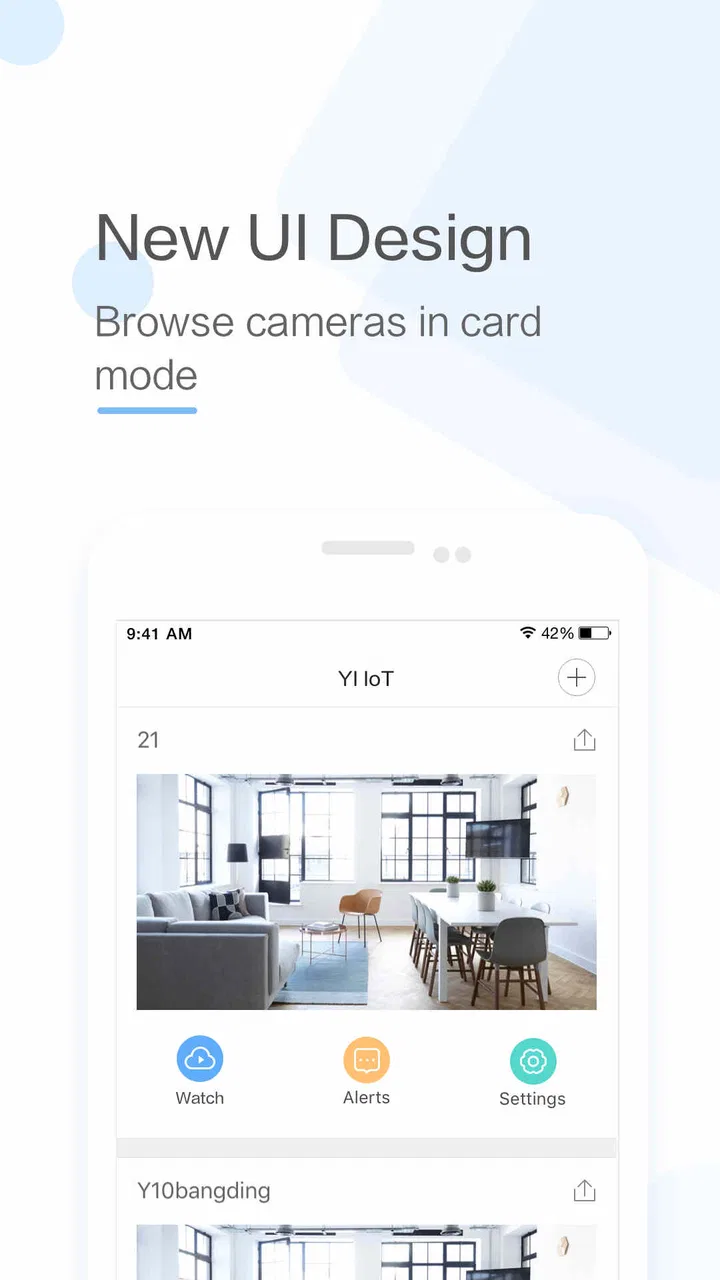
Yi iot is a surveillance app designed to work with Yi cameras, providing real-time video monitoring and recording. Key features include motion detection, two-way audio, cloud storage, and night vision capabilities. The app allows users to monitor their premises remotely, ensuring safety and security from anywhere at any time.
02Is Yi iot compatible with both Android and iOS devices?
Yes, Yi iot is available for both Android and iOS platforms. Users can download the app from the Google Play Store or Apple App Store, ensuring compatibility with a wide range of smartphones and tablets. This flexibility allows users to access their camera feeds regardless of their device's operating system.
03How secure is the Yi iot app in terms of data privacy?
Yi iot employs advanced encryption standards to protect user data and ensure privacy. The app uses secure protocols for data transmission and offers options for cloud storage, which is also encrypted. Users can trust that their video feeds and personal information are safeguarded against unauthorized access.
04What are the subscription options for Yi iot's cloud storage?
Yi iot offers several subscription plans for cloud storage, ranging from basic to premium. These plans vary in terms of storage capacity and video history duration. Users can choose a plan that best suits their needs, allowing for convenient access to recorded footage without the worry of local storage limitations.
05Can multiple users access the Yi iot app simultaneously?
Yes, Yi iot supports multi-user access, which allows different users to view and manage the camera feeds simultaneously. This feature is particularly useful for families or businesses that need multiple people to monitor the security system. Each user can have their own login credentials for secure access.
Pros
- Easy-to-use interface for all users.
- Real-time alerts for enhanced security.
- High-definition video quality.
- Supports multiple device connections.
- Affordable pricing for premium features.
Cons
- Limited cloud storage options.
- Occasional connection drops.
- No desktop app available.
- Requires stable internet for best use.
- Some features are subscription-based.

Yi iot
Gallery